Posted by & filed under Service Standards.

When your car breaks down in the Kent WA area, or just needs some routine service, it feels good to know what type of auto technician training your local garage requires. Your car’s important to your life, and you need to be back on the road as soon as possible with the problem fixed right the first time.

We’re always impressed by the training and continued education our technicians dedicate themselves to. It’s amazing how much knowledge and skill goes into diagnosing and repairing a modern car. It’s not like when your uncle worked on his hot rod over weekend.

Today there are four cylinder engines that make more power than the V-8’s in luxury cars 20 years ago. A new V-6 Toyota Camry could beat Sonny Crocket’s Ferrari in a race to 60 mph.

pro training for auto technicians

Our engines are more and more powerful and at the same time their fuel economy keeps inching up, and they’re so reliable. This is all due to engineering, but the advances come at the price of simplicity. Modern cars are so much more complex from a mechanical standpoint that it makes your head spin.

Then there’s the electronics. Some cars in the local area have several networked computers controlling most of the engine functions and many other vehicle functions as well. We take all of this sophistication for granted, but somebody has to fix it when it breaks.

It’s a real challenge for your local technicians to keep up. It requires a high level of commitment on the part of the auto technician and the service center as well. In addition to the training, there’s the financial commitment to purchase the diagnostic and repair tools as well.

So where do Kent WA technicians go for training? There’re many sources. It’s usually a combination of formal classroom training, training provided in the service center by parts and equipment manufacturers, on-line courses and home study courses. There are many independent certifications available all the way up to Master Technician.

And AutoNetTV produces monthly training for service centers called The Pro Channel. If you were to watch the Pro Channel segment on re-flashing the engine control computer, you’d be amazed at how much is involved: special software, hardware interfaces and a tremendous amount of knowledge and skill.

Service centers in Kent WA have a lot of other resources available as well. No one can know everything, so service centers like Central Avenue Automotive subscribe to data services, technical libraries and even on-line communities that can help them with they run into a difficult problem.

It’s like those medical diagnosis shows on TV. Here are the symptoms – what’s the diagnosis and treatment. Diagnosis is every bit as much an art as a science. As consumers we want everything to be simple, straight forward and cheap – and sometimes it just isn’t.

So, be more relaxed next time you take your car in. You really should trust your service adviser at Central Avenue Automotive. You’re in good hands. The more you know, the more comfortable you can be with your automotive service decisions. Visit AutoNetTV.com to see more great auto tips videos about many service topics.

Photo Credit: NRMA New Cars via Compfight cc

Posted by & filed under Fuel System.

Something you’re going to be hearing a lot about around Kent, WA is diesel engines. We’re not talking about semi-trucks and buses – We’re talking about diesel engine cars, pick-ups and SUVs.

Most people in Kent, WA are surprised to learn that around half the cars on the road in Europe have diesel engines. Nearly all import car makers offer a range of diesel engines abroad – even the ultra-luxury brands like Mercedes and BMW. For the most part, these diesel engines haven’t been available in Kent, WA. But that’s about to change.

In the past, North American diesel fuel has had a much higher sulfur content than European fuel. Recent environmental laws have required changes in diesel formulation and emissions standards here in Kent, WA so we are now ready to start seeing more diesel options offered to Kent auto owners over the next few years.

Why are so many Kent drivers interested in diesel engines? Well first off, diesel fuel is more energy dense. There’s more power in a barrel of diesel fuel than there is in a barrel of gasoline. The result? Better performance and improved fuel efficiency.

Diesel powered vehicles get about 20 percent better gas mileage. And as for power – why do you think that the majority of new heavy duty pick-up trucks are being sold in Kent with diesel engines?

If you think back to the late 1970’s and early 1980’s, you may shudder when you think of the diesel powered cars of the day – noisy, smoky, under-powered beasts that rattled and shook their passengers. Modern diesels sold in WA have evolved considerably.

They are quiet, clean – and powerful. They’re so refined that many Kent car owners can’t even tell they’re riding in a diesel powered SUV. In addition to fuel savings, diesels generally last longer than gasoline engines because of their heavy duty construction.

Another thing the Kent green crowd takes advantage of is the use of bio-diesel in diesel vehicles. Bio-diesel is made from vegetable oil – even recycled cooking oil from Kent restaurants. There is a lot of buzz about Hybrid cars in WA. Look to diesel-electric hybrids in years to come to make a good idea even better.

Every year, auto manufacturers introduce new diesel models. Look for diesels in domestic light trucks, SUVs and passenger cars. Import auto makers have plans to bring more of their outstanding diesel engines to Kent, WA as well.

New Kent diesel owners need to know that properly maintaining a diesel engine is somewhat different than a gasoline engine. Fluid change intervals are different. Emissions control devices have to work harder to filter diesel fuel and to scrub the exhaust so you will need to pay attention to that. And the fuel injection system operates at much higher pressures than gas fuel injection systems, so it’s  to keep your fuel system clean with a diesel.

The good news is that Central Avenue Automotive in  Kent is keeping up with the new diesel technology and will be able to advise you on maintaining your diesel.

When we tell you to look for more diesels on Kent streets, you won’t be looking for smoky tail pipes as a clue. You also won’t be listening for that familiar big rig rattle. And, you certainly won’t be waiting for them at the stoplight, because modern diesels are as quick as their gasoline counterparts.

From all of us at AutoNetTV, ten four, good buddy.

Posted by & filed under Tires and Wheels.

You may know that all newer cars, mini-vans, and light trucks built from 2008 on come with a tire pressure monitoring system. Many slightly older vehicles have these systems, as well. A tire pressure monitoring system – called TPMS – consists of sensors on each wheel that measure tire pressure.

If your pressure drops 25 percent below the manufacturer’s recommended pressure, the sensor sends a signal to a monitoring unit that causes a warning to light up on the dashboard. When you see the warning light, you know it’s time to put some air in your tires.

There are many benefits to driving with properly inflated tires around the Kent area. First is cost savings. Running at the correct air pressure improves fuel economy. Driving on under-inflated tires is like driving through sand – it drags down your fuel economy. You’ll also see longer, more even tread wear, so your tires will last longer.

Tire Pressure Monitoring System

Another important benefit of properly inflated tires is increased safety. Under-inflated tires become hotter and that heat can actually lead to tire failure – possibly resulting in an accident. Your car and the tires themselves will just perform better and more safely around Kent with properly inflated tires.

Local consumer groups, law-makers and vehicle manufacturers advocate for TPMS’s in the hope that they will save lives, property damage, and inconvenience. While you can’t put a value on saving a life, we keep in mind that the TPMS will carry a cost.

The systems themselves are added into the price of the car. The batteries in the sensors will have to be replaced from time to time. Parts will break and need to be replaced. In colder climates around WA, ice and salt are frequent causes of failure.

In addition, there are other behind-the-scenes costs to be aware of. Every time a tire is replaced, repaired, rotated or balanced, the tire technician has to deal with the TPMS.

Your service center must purchase equipment used to scan and reactivate the tire pressure monitoring system after every tire service. Because older tire change equipment can damage TPMS sensors, your service center may need to buy expensive, new tire changers. Since there is no uniformity among manufacturers, technicians need to be trained on several TPMS variations. These behind-the-scenes costs are very real to your service center.

That’s why they are anxious for you to understand the financial impact of your TPMS. In the past, service centers have been able to quickly and cheaply provide tire services, and then pass the low cost on to you as an expression of their good will. Now, even these simple jobs will take much longer.

Sensors will need to be removed and reinstalled. Even a tire rotation will require that the monitor be reprogrammed to the new location of each tire. When a car battery is disconnected, the TPMS will need to be reprogrammed.

So when you start so see the cost of tire changes, flat repairs, and rotations going up, please keep in mind that it’s because of this new safety equipment. Central Avenue Automotive just wants to keep you safely on the road, and we’re committed to do so at a fair price.

It’s important to remember that the TPMS warning only comes on when a tire is severely under-inflated. You’ll still want to check your tire pressure on a regular basis. At every fill-up is best, but you should check pressure at least once a month. Here’s wishing you safe travels.

Contact Central Avenue Automotive for more information about your Tire Pressure Monitoring System.

Photo Credit: Bob Jagendorf via Compfight cc

Posted by & filed under Fuel System.

A fuel injector is a valve that delivers fuel to a vehicle’s engine. It has to deliver the precise amount of fuel, to precisely the right place, precisely when the engine needs it. The fuel also has to be mixed with air before it can burn in the engine.

Fuel injectors are engineered to spray fuel in a specific pattern into the engine. (The pattern varies by engine type and design.) In order to achieve these spray patterns, the fuel must be pressurized.

The pressure in a fuel injection system varies depending on its type. Many gasoline engines use port injection systems, which operate with a pressure of 60 pounds per square inch. Newer direct injection systems operate at 10 to 30 times that pressure. Some diesel passenger vehicles have fuel injectors that operate at 30,000 pounds or more per square inch.

Vehicles have one fuel injector for each cylinder in the engine. Your vehicle’s control computer constantly monitors the engine and various sensors in the vehicle and adjusts the fuel injectors accordingly so that they can deliver the proper amount of fuel to the engine. As you can see, fuel injectors are a sophisticated and vital part of your vehicle’s engine.

Because fuel injectors are such precision instruments, dirt and contaminants are a serious detriment to their performance. When an injector gets gummed up, it affects the pressure, pattern and timing of the fuel delivery. The result is a decrease in fuel economy and loss of engine performance.

So it’s critical to keep your fuel injectors clean. That starts with keeping the fuel in your tank clean. High-quality fuel contains detergents and additives that help clean your engine. Brand-name WA fuel companies also deliver a more consistent quality of fuel than do bargain stations in the Auburn area.

The second way to keep your injectors clean is to keep your fuel filter clean. This filter screens dirt and rust out of the fuel as it travels from the tank to the engine. If the filter clogs up, fuel will bypass it and carry its load of dirt into the engine.

Check your owner’s manual or Central Avenue Automotive in Kent to find out how often you should change your fuel filter. This should be part of your regular preventive maintenance. Also, remember that if you use bargain-brand or low-grade fuels, or if you drive an older vehicle, your filter will need to be changed more often.

You can also purchase cleaners that will protect your fuel injectors. These cleaners are added to the fuel tank. They work best at preventing build-up in your fuel injectors and can clean up small amounts of carbon, gum and varnish. But they won’t be able to clean a fully gummed-up injector. Read the labels before using any of these products for full directions on their use.

If your fuel injectors are gummed up, you can get a professional deep cleaning service at Central Avenue Automotive in Kent that will result in better gas mileage and improved vehicle performance.

Good car care will prevent serious damage to your fuel injector system. And this is one system that you want to keep in perfect condition.

Posted by & filed under Engine.

Did you know that most of the cars driving around Kent WA carry more computer power than the Apollo 121 Lunar Module that landed on the moon in 1969?

New cars sold in the Auburn area have as many as twelve networked computers and over five miles (eight kilometers) of wiring. In fact, for the last decade or so, auto computers have been controlling about 85 percent of your vehicle’s functions.

Cars have sensors for manifold air temperature, coolant temperature, manifold air pressure, airflow, throttle position, vehicle speed and oxygen content. All of this electronic wizardry is pretty complicated. So how do you know when there is a problem?

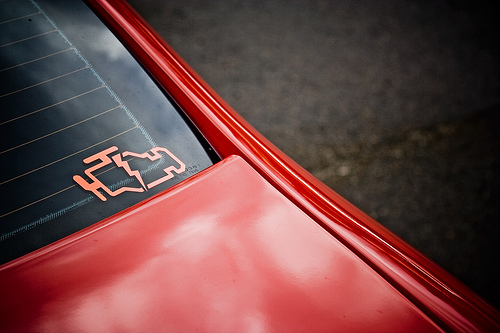
check engine

It’s simple; the Check Engine light comes on. The computer monitors all the sensors and uses that information to decide what to adjust such as the fuel mix, spark timing and idle speed. In addition, the computer monitors its own circuits. When it finds a fault, it turns on the Check Engine light and stores a trouble code in the computer.

It can be pretty disturbing when the Check Engine light comes on. We wonder just how urgent it is. Generally speaking, it is not critical like a temperature or oil pressure light. When you get one of those it means STOP NOW! When the Check Engine light shows up, you should come in to our service center at Central Avenue Automotive to find out what the matter is as soon as possible.

Since 1996, there has been a strong emissions control component to the Check Engine diagnostic. But if your Check Engine light flashes on and off, you know that it is more urgent and you need to get it checked immediately to prevent damage. You should slow down and avoid towing or heavy loads until you can get it checked out.

Your technician at Central Avenue Automotive has special diagnostic equipment that will retrieve the trouble code from the computer and help him determine what is wrong. From there, we can fix it and get you back on the road.

Stop by if you’re check engine light is on.

Photo Credit: Twelvizm via Compfight cc

Posted by & filed under Air Conditioning.

Your browser does not support video

Most Kent motorists worry about a breakdown or a tire blowout on a busy WA freeway but don’t worry too much about failure of their air conditioning system. A breakdown at the side of the road can be a miserable and dangerous affair during Auburn rush hour, but so can a long ride in a hot SUV.

A lot of Kent drivers judge their vehicles’ air conditioning systems as “non-essential” and so may neglect them in favor of repairs and maintenance that keeps the SUV running. But preventive maintenance of an air conditioning system is simple and inexpensive, while auto a/c repair can be very expensive in Kent.

Kent motorists should have the refrigerant in their air conditioning system checked regularly to ensure it is adequate and clean. Air conditioning systems often fail because air and water have contaminated the refrigerant. Air reduces the efficiency of the refrigerant, and water can cause rusting of the system’s components. If your refrigerant is contaminated, the system should be evacuated and recharged. This will actually extend the life of your air conditioning system, preventing expensive repairs, and keep it at peak performance.

Inadequate refrigerant indicates a leak in the air conditioning system. Over time, seals in the system can crack, causing the refrigerant to leak out, reducing the efficiency of the system. Replacing these seals will keep your SUV air conditioning system at its best, and, again, will help you avoid more expensive repairs.

At Central Avenue Automotive, we advise our Kent customers to run their air conditioner periodically in the winter. This will keep the seals from drying out and cracking, saving them the inconvenience of this relatively minor repair.

Check with your SUV owner’s manual or with your Kent tech for information about how often your SUV air conditioning system should be serviced.

Another piece of good auto advice: if your SUV air conditioner isn’t working or is starting to show signs of breakdown, NOW is the time to get it fixed at Central Avenue Automotive in Kent. Waiting will only increase the chances that you are in for major repairs and an expensive repair bill.

On a final note, if you own an older vehicle, you should check into upgrading the air conditioning system. Vehicles manufactured before 1993 often contained a refrigerant known as Freon. The manufacture of Freon was outlawed in 1993, leading to an ever-dwindling supply, which leads to an ever-steeper price for Kent car owners in WA. If your vehicle still uses Freon, you should have it retrofitted to use the new, EPA-approved R134A refrigerant. The retrofit will actually pay for itself by reducing the cost to recharge the refrigerant in your SUV.

Remember, preventive maintenance — of your entire car — will keep you on the road. And, in this case, it will help you keep your cool!

Posted by & filed under Engine, Fuel System.

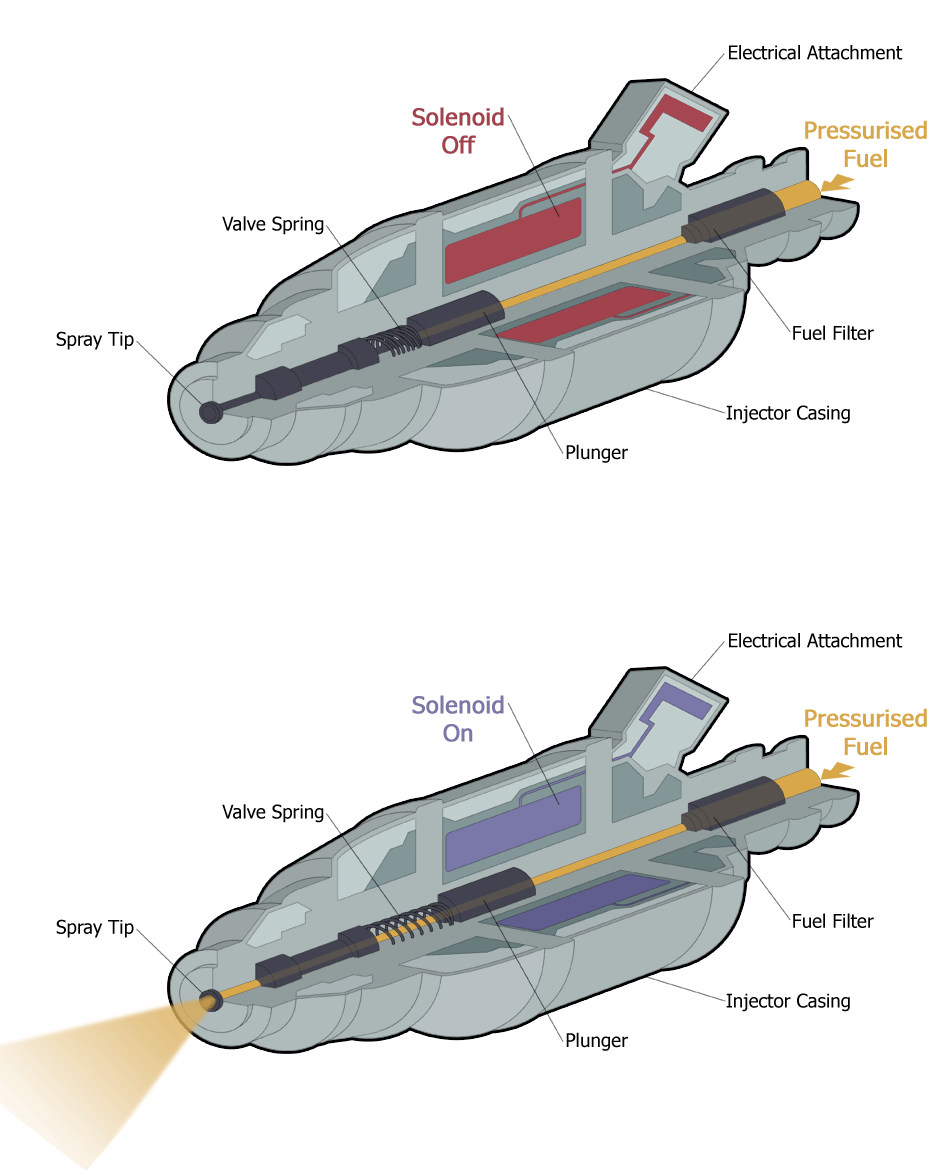
The last new car sold with a carburetor in North America rolled out of the dealership in 1990. Since then, all new vehicles have had fuel injectors. In very simple terms, a fuel injector is a valve that squirts fuel into your engine. Your engine control computer tells the fuel injector how much gas to deliver, as well as the precise time it should be delivered. This happens thousands of times a minute. Fuel injection is a much more precise way of delivering fuel than carburetors, which translates into better fuel economy and power. Virtually all fuel injectors for gas engines are known as port fuel injectors because they deliver the fuel to a port just outside the cylinder. Port fuel injectors operate at about 40 to 80 pounds per square inch of pressure.

Fuel Injector

A few auto makers have introduced gas direct injection systems on some engines recently. These systems inject the gas directly into the cylinders under very high pressure — hundreds of times the pressure of port injection systems. Although more complicated, direct injection technology promises greater power with improved fuel economy, so we can expect to see more of it in the future.

As you can see, the level of precision required of your fuel injectors is very high. They need to be operating properly in order for your car to run correctly.

High temperatures under your hood and variations in gas quality cause fuel injectors to become fouled with wax, dirt, and carbon. Injectors can become partially clogged, preventing them from delivering the proper amount of fuel at the correct pressure. The design of each engine requires a specific spray pattern from the fuel injector that might be altered when the injector is dirty. When injectors are dirty, the fuel doesn’t burn as efficiently, resulting in poor fuel economy and loss of power, so it is important to keep your fuel injectors clean.

Skilled service technicians at Central Avenue Automotive in Kent can perform a fuel system service for you. That’s a full service, rather than a simple cleaning. That’s because the fuel has a lot of ways to become dirty or contaminated between the gas tank and the fuel injector. A fuel system service starts with a fuel filter replacement. This filter cleans the gas as it leaves the tank. The various parts of the fuel intake system need to be cleaned from time to time to remove harmful gum, deposits, and varnish. Finally, the fuel injectors are cleaned so that they operate properly and deliver the right amount of fuel at the right time.

Your Kent area service center uses a process for cleaning your fuel system that includes state-of-the-art cleaning chemicals, as well as some old-fashioned scrubbing. Proper maintenance of your fuel system means that you will spend less on gas, enjoy strong performance, and prevent costly repairs down the road.

Posted by & filed under Fuel System.

No matter how well they’re made, vehicles in Kent, WA will have design or manufacturing problems.

And when the government thinks a problem is really serious for people in Kent, WA, they require the auto manufacturer to issue a recall notice and fix the car free of charge. The auto maker then tries to contact everyone in Kent, WA who owns that type of car to get the recall work done. Perhaps you have received a postcard notifying you of a recall issue on your car. Because these recalls always affect safety, Kent drivers should take them seriously. This isn’t difficult to do because it’s easy to see if a vehicle’s being recalled.

Finding Vehicle Recall Information The government has links on its websites, or just visit AutoNetTV for links. There are many websites with free recall information and searches. There’s CarFax, AutoByTel and the DMV.

Recalls are serious, but not all that common. But sometimes there are less critical issues, and for these, auto makers issue a Technical Service Bulletin, or TSB, that tells service centers like Central Avenue Automotive how to repair a frequent or difficult problem.

The pros get updated information through subscription plans, also available in consumer versions for a reasonable cost. So when car makers recalls occur, get the work done, and keep you and yours safe.

Posted by & filed under Engine.

Your engine is powered by the energy created by exploded fuel, but some of the vapors from the explosions escape into the lower part of the engine, which is called the crankcase. The crankcase is where your engine oil hangs out. These gases are about 70% unburned fuel. If the gases were allowed to stay in the crankcase, they would quickly contaminate the oil and turn it to sludge. Sludge is one of the biggest enemies of your engine, clogging it up, eventually leading to expensive failures. Also, the pressure build up would cause seals and gaskets to blow out. Therefore, these gases need to be vented out.

Gasoline engines used to simply have a hose that let the poisonous fumes vent out into the air. In 1963, the federal government required gas engines to have a special one-way valve installed to help reduce dangerous emissions. Diesel engines are not required to have these valves.

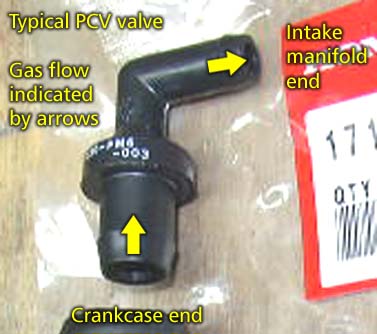
PCV Valve

The positive crankcase ventilation, or PCV, valve routes crankcase gases through a hose and back into the air intake system where they are re-burned in the engine. Fresh, clean air is brought into the crankcase through a breather tube. It’s really a pretty simple system, but does an important job. The re-circulating air removes moisture and combustion waste from the crankcase, preventing sludge. This extends not only the life of your oil, but the engine as well. The PCV relieves pressure in the crankcase, preventing oil leaks.

Eventually, the PCV valve can get gummed up. Then it can not move enough air through the engine to keep it working efficiently. If the PCV valve is sticking enough, you could have oil leaks, excess oil consumption and a fouled intake system. If you experience hesitation or surging or an oil leak, it may be a sign of PCV value problems. Your owners’ manual may give a recommendation for when the PCV valve should be replaced – usually between 20,000 mi/32,000 km and 50,000 mi/80,000 km. Unfortunately, some manufacturers don’t list a recommendation in the manual, so it can be easy to overlook.

Many PCV system problems can be diagnosed with a visual inspection. Fortunately, PCV valve replacement is both quick and inexpensive. Proper oil changes will greatly extend the life of the PCV valve. Skipping a few recommended oil changes can allow varnish and gum to build up in the valve, reducing its efficiency. So now when your Kent service technician tells you its time to replace your PCV valve, you will know what he’s talking about. If you have had your car for a while and this is the first you’ve ever heard of a PCV value, ask your tech to check yours out or call Central Avenue Automotive at 253.854.6762.

Posted by & filed under Maintenance.

High gas prices in Kent increase the cost of living for WA drivers. You’ve probably budgeted a certain amount for vehicle related expenses. Increased fuel costs now consume a larger portion of our incomes, causing some Kent vehicle owners to skimp in other areas – like scheduled maintenance.

According to WA news reports and automotive industry studies, this is becoming increasingly more common. In fact, nine out of ten personal vehicles on the road have at least one maintenance or repair item that hasn’t been done. Some of these items pose serious safety risks. Others are just more likely to make it more expensive to drive.

Gas Savings In Kent: Sharpen Your PencilIn this area, we can take a lesson from professional Kent vehicle owners. I’m talking about fleet owners and operators. You know, Kent folks like the trucking companies and delivery services. Because their livelihood depends on it, they have gotten scheduled maintenance down to a science. And the last thing they skimp on is regular maintenance.

Why is that? Well, for one thing they know that routine maintenance prevents expensive repairs and costly breakdowns. They also know that a well-maintained vehicle uses less fuel. For them, even a small decrease in gas mileage may put their Auburn business in the red.

So what does this mean to Kent drivers? Well, there’s a ninety percent chance that you’re missing some service that would improve your fuel economy. Here’s a quick reminder list:

Fuel system cleaning, transmission service, differential service, engine air filter, wheel alignment, oil change, tune up.
Ring any bells? Can most Kent motorists honestly say that there isn’t at least one thing on the list that hasn’t been done?

Let’s suppose you chose to spend one hundred and fifty dollars and get caught up on some of these services at Central Avenue Automotive. Figure that they combine to improve your fuel efficiency by fifteen percent. What would that mean to your pocketbook?

Well, the average personal vehicle in Kent is driven about twelve thousand miles a year. If you get twenty miles per gallon in your SUV, over the course of one year you would pay for the hundred and fifty dollars worth of service and save an additional hundred and sixty five dollars if gas is at three dollars and fifty cents. If gas is four fifty, you would save two hundred and fifty-five dollars. And you’d rack up savings of three hundred and forty five dollars with gas at five and a half bucks.

GAS PRICE
$3.50
$4.50
$5.50
20 MPG
$165
$255
$345

From this you can see that the more fuel costs, the more it pays to keep up on scheduled maintenance. Some of us drive trucks in Kent for work or recreation – or want a large SUV for family needs. A fifteen percent improvement in gas mileage can generate huge savings – six hundred and sixty dollars a year if gas is four fifty a gallon in Kent. Take a look at this table to see where your savings could lie.

GAS PRICE $3.50 $4.50 $5.50
10 MPG $480 $660 $840
20 MPG $165 $255 $345
30 MPG $60 $120 $180


So catch up on those services you’ve been neglecting at Central Avenue Automotive. Get a couple done now and a couple next time. Chances are you’ll save a lot of money at Kent gas pumps this year – and a lot more on repairs in years to come.