Posted by & filed under Maintenance.

If you’ve ever been driving around Kent and had a headlamp go out, you’ve probably just wanted to replace the bad bulb. If your car uses halogen headlamps, they dim over time. So if you just put in one, they won’t have the same brightness which can be distracting and will affect your field of vision.

To have your headlights inspected, visit us at Central Avenue Automotive. We’re at 1514 Central Ave S Ste A in Kent, WA 98032. Or give us a call at 253.854.6762

Experts in Kent recommend replacing your halogen headlamps every year. It’s easy to remember if you do it when daylight savings time changes in the fall. That way you’ll have bright headlamps for those long Kent winter nights.

There are other types of headlamps in addition to halogen. There are the old standard bulbs that have been around for decades. These are OK, but you can usually upgrade to halogen. They cost a little more but you can’t believe the difference. If you do a lot of night driving you might want to use a premium halogen bulb that filters out the yellow hues and give a very white light that’s a lot like daylight.

You may have noticed those bluish headlights on luxury cars. They are high intensity discharge or, HID lamps. They really light up the road. You can upgrade to HID on some vehicles. These cost quite a bit, but they’ll last for the life of your car. If you want your Kent friends to think you have HIDs, you can get halogens with a bluish tint – no one needs to know.

Seriously, though, night driving is all about reaction time – time to stop – time to get out of the way. You can’t react to what you can’t see. You need headlamps that’ll give you a good view down the road and good peripheral vision as well. And your headlights need to be aimed correctly so you can see and also, to keep your lights from shining off into on-coming traffic.

You may have seen older vehicles with headlights that are awfully dim and maybe even yellow. That’s because the plastic headlight lenses have gotten cloudy and yellowed with age. They can be replaced, but many Kent service centers offer a service to restore the lens that’s a lot cheaper.

You can’t drive if you can’t see. AAA reports that nine out of ten vehicles have dirty or yellowed headlamps. So run the window squeegee over your headlights when you gas up to clear the dirt and bugs. Get your lenses restored if they need it and don’t forget to replace your standard or halogen bulbs every fall.

Posted by & filed under Maintenance, Monitoring System.

IF I HAVE HAD MY CODES READ BY A PARTS STORE, ISN’T THAT A DIAGNOSTIC?

What is a diagnostic? It’s the process in which a technician determines the cause of failure in a vehicle, which may require the use of sophisticated scanners, computers, wiring diagrams, special tools, and an experienced, well-trained technician. Central Avenue Automotive has the latest factory OEM diagnostic equipment for most foreign and domestic cars and trucks.

Advances in technology have made cars more efficient and more comfortable, but this has come at the cost of making cars much more complicated. In the early 1980s, cars started out with just one computer to help manage basic engine functions. Computers were introduced to cars in an attempt to improve vehicle emissions. Today’s cars and trucks have multiple computers and a complex network that ties them all together.
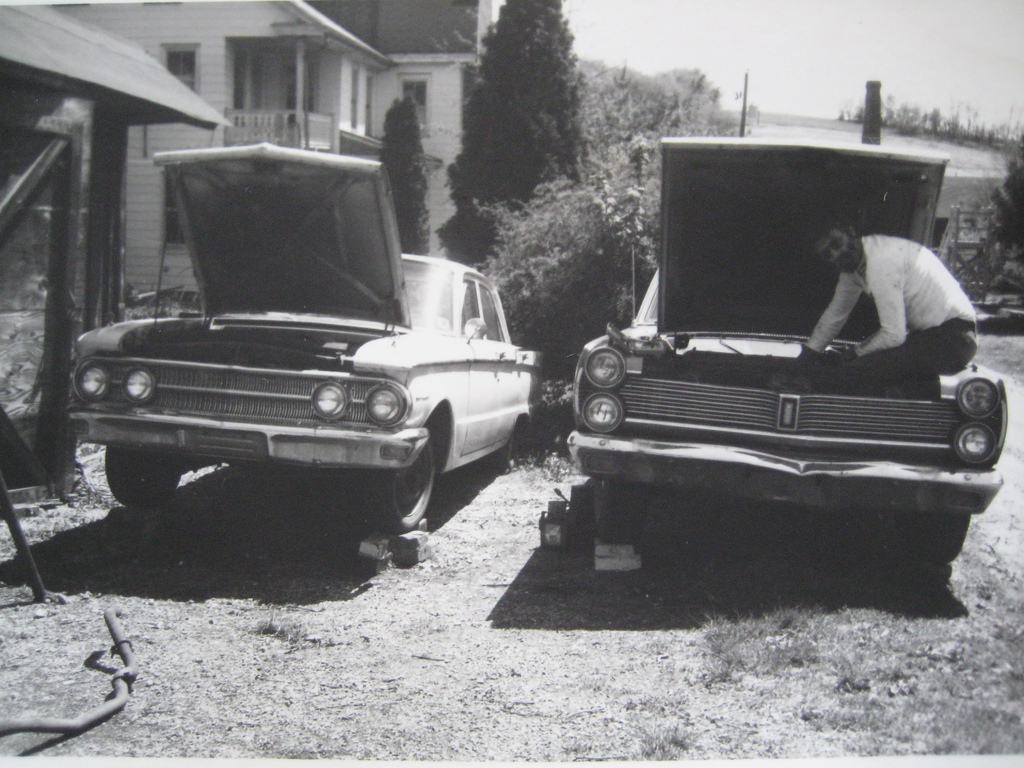
Performing Engine Diagnostics

Photo Credit: Hugo90 via Compfight cc

These innovations have made it much more difficult to diagnose vehicle failures, which makes it impossible to diagnose without the correct hardware and software since each car model has its own software and hardware package, plus special tooling. Diagnostics specific to the car model allows the technician to “talk” to the car, retrieve data from the vehicle’s multiple computers, and perform car diagnostics by reading codes. However, this is just the first step in the vehicle’s diagnostic process.

A fault code does not tell the technician what is wrong with the vehicle! What a fault code does is identify the area of the onboard computer system that is having the malfunction. It is up to the technician to download the data and interpret it, then do pinpoint testing to determine the failure and the appropriate repair. One of the most common things we see at Central Avenue Automotive are vehicles that have a fault code for a specific circuit and a parts store has pulled codes for it. The vehicle owner has replaced the part that code identified was not operating within the vehicle specifications, only to find out that the problem was not fixed. It happens, and that is why having a technician with problem-solving experience is so critical to diagnostics.

Today’s retail auto parts stores offer a customer “disservice” by selling generic code readers. These generic code readers do not read all the codes specific to the vehicle. Instead, they read just the codes that are related to vehicle emissions. Unfortunately, these generic codes tend to lead people in the wrong direction. An example of this is the O2 sensor code. An auto parts store reads the code, provides a printout of the code, and has a disclaimer at the very bottom in small print. The disclaimer says to consult an automotive technician for a diagnostic. But like most of us, we tend to ignore the fine print, buy the O2 sensor and install it. Afterwards, our check engine light is still on and we have the same fault code!

A diagnostic from a qualified technician would have revealed that the O2 sensor was working fine. The real problem is that it was another component that had failed and was sending bad data to the engine computer. As a result, the O2 sensor sent a fault to the engine’s computer that it was not seeing the correct air fuel ratio due to a faulty air flow sensor, and there was no fault code available for the air flow sensor. See how a generic code reader can mess things up?

All newer vehicles are equipped with built in computers that monitor every aspect of the car. Some of the areas that it monitors are:

  • Cruise Control
  • Security
  • Navigation
  • Air Bags
  • Keyless Entry Systems
  • Anti Lock Brakes
  • Climate Control System
  • Fuel Pump
  • Engine Cooling Fan
  • Body
  • Chassis
  • Powertrain
  • And More!

In other words, a modern car is a rolling computer network. It is amazing how many embedded controllers a vehicle can have. The onboard computer not only monitors the proper functioning of your car, it also records issues and stores them as codes. These codes can then be used to determine the sources of car trouble whenever it occurs. These codes are generated when a particular component of the vehicle fails to report back to the computer correctly. For example, if there is an issue with the engine, the engine will not report back to the computer correctly and an error code will be recorded.

This system of codes helps auto technicians to diagnose your vehicle. These codes can be diagnosed at Central Avenue Automotive by one of our experienced technicians. Our technician will use a scanner or a laptop device to tap into your car’s computer and gain access to the recorded error codes and the vehicle’s data stream. Some diagnostics can be performed in as little as one hour.

Once an issue has been diagnosed, our top-of-the-line technicians are trained to resolve any code your car throws at them. Give us a call at (253) 854-6762, or schedule an appointment using our convenient online appointment booking service. You can also come into our repair shop, located at 1514 Central Ave. Kent, Washington 98032.
Posted by & filed under Maintenance, Parts.

WHY DOES THE TIMING BELT ON MY CAR NEED TO BE REPLACED EVERY SO OFTEN?

Timing is everything to a well-operating engine, and that is why a timing belt is so important. Most of our customers at Central Avenue Automotive are aware that their vehicles require timing belt replacement after a recommended period of mileage, but not many understand why. That’s why today’s blog is dedicated to educating you on the importance of a timing belt and why the timing belt in your vehicle needs to be replaced every so often.

Think about how a metronome determines the speed of a piece of music, or how the second hand on your watch counts off the minutes of each hour. Now, think about how out of sync the world would be if we did not have metered time in music, or if clocks and watches took a willy-nilly approach to keeping time.

Think of a synthetic rubber timing belt, which is reinforced with fiber cords. When the engine is on, it’s in constant, timed motion. Thanks to the belt, the connection between the crankshaft and camshaft is in sync. So why is this important? The crankshaft converts energy from the pistons, which move up and down in rotational energy that is applied to the transmission, which eventually turns the wheels. The camshaft opens and closes the engine’s valves to allow air and fuel in the engine through the intake valves, and out through the exhaust valves. The timing belt links the two in harmony. Without the timing belt, the pistons and valves would collide, fuel and air would not enter the engine correctly, and exhaust would not exit correctly. All of this chaos will prevent the engine from running. Just like a bicycle chain, if it’s damaged, the bike will not pedal forward.

The timing belt does wear down and stretch out over time. Timing belts are exposed to engine oil and coolant leaks, which will damage the belt and make it more likely to slip or break. If the timing belt slips or breaks, this is bad news for the vehicle and its owner’s pocket book. Why? This internal collision can destroy a large amount of the engine and sometimes entire engine replacement is required. Therefore, it’s important to stay ahead of your timing belt’s life span by replacing it every four years or 60,000 miles, or in newer vehicles, every 100,000 miles. Be sure to check your vehicle’s maintenance manual or give Central Avenue Automotive a call to see what your car or truck’s manufacturer suggests.

Timing Belt Replacement

Timing belts on most vehicles range from $300 to $600. Some European cars and exotic cars can cost more. When you replace the timing belt, there are some other components that need to be inspected during the repair process. These components include the following:

• Water pump
• Idler pulleys
• Tension pulleys
• Drive belts
• Engine oil seals

Usually, it is cheaper to inspect these components as preventive maintenance work while replacing the timing belt because there is no extra labor cost. Most of the time, it is best to replace the other belts due to the fact that they are already removed in the preventive maintenance process. Camshaft and crankshaft seal replacement will also have a substantial labor reduction, due to the fact that most of the components removed during timing belt replacement are much easier to replace when the timing belt has been removed from the vehicle.

Fortunately, timing belts are not expensive (compared to major engine repair) and can easily be replaced during your vehicle’s major maintenance service. Any time you bring your vehicle into Central Avenue Automotive for scheduled maintenance, we will visually inspect your timing belt for cracks, shredding, tears, or excessive slack. If we see that your timing belt requires replacement, even if it’s before the recommended 60K or 100K mileage marker, we’ll notify you so you can authorize replacement.

Not only are we honest about our timing belt repair processes, but we are meticulous about doing the timing belt replacement correctly on all the foreign and domestic vehicles we service. That’s one of the reasons why Central Avenue Automotive is the mechanic you can trust for timing belt replacement in the Kent, Washington region. Click here to schedule an appointment for timing belt replacement. Or, if you prefer, give us a call at (253) 854-6762.

Posted by & filed under Brakes.

Brakes really aren’t optional equipment. And taking care of them isn’t optional either.

A regular brake inspection is on every car’s maintenance schedule. An inspection will check your brake system and let you know if there are any problems. Of course, if you’re having trouble with your brakes, get your car into a Kent or Federal Way service center right away. And watch out for these problems:

  • Low or spongy brake pedal
  • Hard brake pedal
  • A brake warning light that stays on
  • Constantly squealing or grinding brakes
  • Vibrations or clunking sounds when you apply your brakes

There are two types of brakes: disc and drum. Disc brakes have a rotor that’s attached to the axle. Calipers straddle the rotor, kind of like the brakes on a bicycle. Drum brakes are more common on back wheels. Pads, called shoes, push against the inside of the drum to slow the vehicle.

There are several things that need to be serviced on the brake system. First, the brake pads and shoes wear out with use, and become too thin to really help. If the brake pads wear away completely you can damage the rotors. The calipers can grind grooves in the rotor. Then the rotor must either be resurfaced or replaced and that can be expensive. But putting it off is dangerous because your vehicle won’t stop as quickly. Sometimes rotors warp or crack and must be replaced.

Brake fluid is also important. When the brakes are applied, the pressure in the fluid activates the brake pads or shoes. Not enough fluid, not enough pressure to brake properly. Also, water builds up in the brake fluid over time, which leads to corrosion, leaks and brake damage, and with hard use, the brakes could severely fade or even fail. You should change the brake fluid when your manufacturer recommends it.

There are different grades of brake pads. There are regular, metallic and ceramic – higher grades cost more, but give better braking performance and smoother operation. It’s OK to upgrade your brake pads. But, never use a grade that’s lower than what the manufacturer recommends.

Be sure to properly maintain your brakes because it’s a lot cheaper than paying your nearest Auburn area body shop after an accident.

Posted by & filed under Parts.

Ever heard the sad tale of a staggering repair bill from a broken timing belt? Bad news. Let’s take a lesson from their woes and remember to think about our timing belt.

First, let’s review what a timing belt does. The top part of the engine, over the cylinders is called the cylinder head. The head contains the valves. There’s at least one valve that lets the fresh air into the cylinder. This air, mixed with fuel, burns to create power. Then another valve or two open to allow the exhaust out of the engine. Each cylinder has 2 to 4 valves – that’s 12 to 24 valves for a V-6, up to 32 values on a V-8. The opening and closing of the valves is done by a camshaft. The timing belt uses the rotation of the engine to drive the camshaft which opens and close the valves. It’s called a timing belt because it has to be adjusted to rotate the camshaft to keep proper time with the engine so that everything’s in sync.

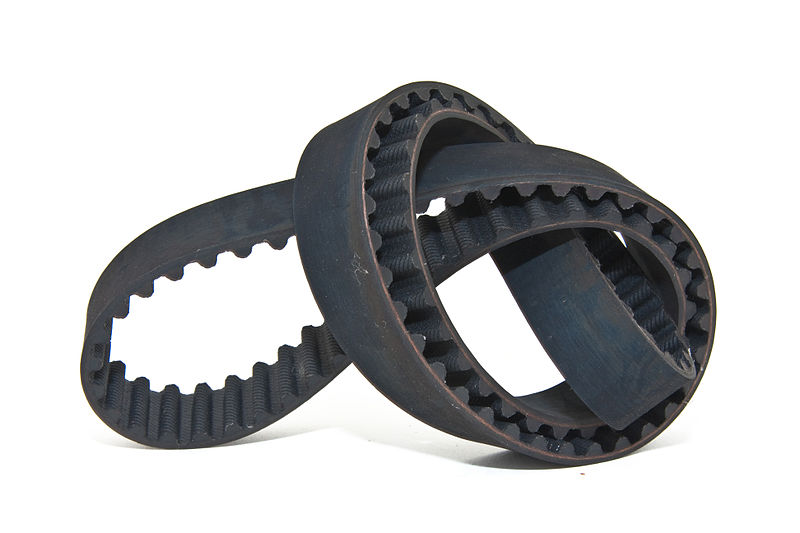
The timing belt is a toothed rubber belt . But some cars use a timing chain or timing gears instead of a belt. Timing chains and gears are much more durable, but manufacturers are using belts more because they are quieter – and cheaper. If you have a small or mid-sized passenger car, crossover or mini-van, chances are you have a timing belt.

Unfortunately, timing belts fail without any warning. That shuts you down right away. A technician can inspect your timing belt and look for cracks and looseness. But getting to the belt to take a look can be almost as much work as changing it on some cars. That’s why manufacturers recommend replacing the belt from time to time. For most vehicles it’s from 60,000 to 90,000 miles or 95,000 to a 145,000 kilometers. If your owners’ manual doesn’t specify an interval ask your service advisor.

One AutoNetTV producer has had two timing belts fail. The first was while he was waiting at a stop light – that repair cost several thousand dollars. The second was while driving on the highway – that one cost more than twice as much. Both had the cars out in the shop for three weeks. His cars had what we call “interference engines”, meaning that the valves and pistons are very close to each other. If the timing belt slips even one notch, the pistons will slam into the open valves. That’s why our friend’s highway failure was so much more expensive – his engine was traveling so fast that the valves were smashed and they chewed up the cylinder head.

A non-interference engine will just shut down if the timing belt breaks. You’re stranded, but the engine doesn’t suffer permanent damage. In both cases, our hapless friend was just a couple oil changes past the recommended interval for changing the timing belt. This is one of those things that you just cannot put off. Now replacing a timing belt is not cheap – but repairs for a broken belt can be many times as much.

Check your owners’ manual right away – especially if you have more than a 60,000 miles or 95,000 kilometers. You may need to get that belt replaced right away. And on many cars, the timing belt drives the water pump. So, it may be a good idea to replace the water pump while you’re at it because 90% of the work required for the new pump is already done with the belt change. Doing both at the same time saves you a lot of money because as they say, “timing’s everything”. Parts, Timing Belt

Posted by & filed under Uncategorized.

Central Avenue Automotive is a 2013 Nominee for Best Repair for Western Washington! We’d be grateful if you’d support us with a vote. Just click the badge to give us some love! Thank you so much for letting us work with you 🙂

Posted by & filed under Maintenance.

For advice on how to make your SUV last longer, visit us at Central Avenue Automotive
1514 Central Ave S Ste A
Kent, WA 98032
253.854.6762

These days many people in the Auburn area are really committed to making their cars last a long time. First thing: you’ve got to start with what you’ve got. It’d be ideal if people started with a brand new car, never missed a scheduled service item, paid attention to the severe service maintenance schedule and had regular inspections. But if you’ve had the vehicle for a while, or bought it used, its maintenance history is what it is; and that’s where you start.

Go through the maintenance schedule for your SUV and see what’s been done and when. Have your Kent service advisor at Central Avenue Automotive do an inspection and come up with a list of stuff that needs to be done. Review the list and prioritize the work, talk about budget and make a plan to get caught up.

Making a plan is so important. Suppose you go in for an oil change and learn you need your cooling system serviced, a transmission service and are coming up on a timing belt replacement in the next 5,000 miles. You might be pretty overwhelmed.

To make it even more stressful, these are all very important systems that are expensive to repair if there’s a failure. In consultation with your Kent service advisor, you might decide to take care of the transmission on this visit, set an appointment for the cooling system service next month and get an estimate for the timing belt replacement so you’ll be prepared for it in a few months.

Having a plan for taking care of these important services will set your mind at ease.

Posted by & filed under Tires and Wheels.

So, everyone in the Kent WA area knows how great helium is – you know, party balloons, squeaky voices. But a lot of people around Kent still haven’t heard about the benefits of nitrogen in your tires, and how it can help your tires. Here’s some great advice from AutoNetTV, brought to you by Central Avenue Automotive.

Nitrogen has actually been around for a long time in the Kent WA commercial sector, but it’s just starting to catch on for private vehicles in the 98032 zip code area.

Why nitrogen in your tires? Air is air, right? Actually, it turns out there is a difference.

Contact Central Avenue Automotive to learn more about nitrogen in your tires
You can find us at:
1514 Central Ave S Ste A
Kent, WA 98032
Or call us at 253.854.6762

The heart of the matter is maintaining proper tire inflation. When your tires are properly inflated, they last longer, handle better and more safely, and save you money at the gas pump.

The problem is that tires filled in Kent with regular air can lose a pound and a half of air pressure every month. This just happens as the oxygen in the tire seeps out. So if you don’t check your pressure for a month or two, well, you can be significantly low – low enough to actually affect your handling, shorten tire life and waste money at the fuel pump.

How does nitrogen help? Regular air contains about 78% nitrogen. Nitrogen is the largest molecule in air. It’s dry and non-flammable. Air also contains 21% oxygen, which is smaller and seeps out of the tire three to four times faster than nitrogen.

So, a tire filled with nitrogen at Central Avenue Automotive will take about six months to lose as much pressure as regular air does in just one month. So it’s more forgiving for those who don’t check their pressure every week.

Also, when oxygen is at higher temperatures – like those inside your tire when you’ve been driving for awhile – it oxidizes the inside of your tire. Getting the oxygen out of your tire means that it’ll last longer.

Who’s using nitrogen? Well, let’s start with NASCAR and Indy. These racers like nitrogen’s ability to maintain consistent tire pressure and reduce tire temperatures under very demanding conditions. The US government requires all commercial aircraft to have nitrogen in their tires. NASA and the US Military use nitrogen. The mining industry has been filling those “humongous” tires with nitrogen for years. And semi trucks and trailers are starting to use nitrogen extensively.

You may have heard some detractors of nitrogen. But the studies and white papers from tire and vehicle manufacturers demonstrate that the technology really works.

In fact, a prominent consumer research group did a study where they filled some tires with air and some with nitrogen and stacked them outside for a year. They observed that the nitrogen filled tires did hold their pressure better, but they couldn’t see the economic benefit. But that particular test has very little to do with the real world. Most tires are actually holding up cars and they also get driven around and do a lot of work. So if nitrogen helps them last longer, saves gas and gives safer handling, it’s worth considering.

Learn more about nitrogen in your tires by watching our attached auto tips video from AutoNetTV.

Posted by & filed under Maintenance.

Your car is important to you and keeping it running properly is critical to your Kent lifestyle. That’s why you’re smart to have it serviced regularly at Central Avenue Automotive in Kent. And even though it may just be routine maintenance, you want it done right by automotive professionals.

It’s also very important to your Kent service center to keep you happy and on the road. You might be surprised at the amount of money our Kent auto service center spends annually to make sure our considerate service advisors are properly trained.

Central Avenue Automotive offers a variety of automotive services for many kinds of vehicles. We need to be current on the latest techniques and parts so that we can give you quality service. Our Kent centers subscribe to data services that list the high quality parts and fluids recommended by your manufacturer.

And each service has a checklist of standard procedures. Central Avenue Automotive technicians follow these procedures so they can safely deliver a consistent level of high-quality service.

Some services at Central Avenue Automotive require the use of specialized equipment. Central Avenue Automotive technicians are trained extensively on this equipment so that they can service your car quickly and efficiently.

Classroom, video and hands-on training is provided by the company and outside trainers. It’s not only important that considerate service advisors be able to perform a given task, they also need to be thoroughly trained in inspection and diagnostic techniques. One of the great services they perform is to detect potential problems before they become serious (and costly).

The automotive service industry has standards for classifying and communicating problems to drivers. For example, it’s one thing to learn that your manufacturer recommends that you change your serpentine belt every 30,000 miles and another to learn that the belt is on the verge of failure. These standards help you understand the urgency of recommendations, letting you make better automotive service decisions.

WA folks may be interested to know that service technicians are trained in compliance with federal and local Kent laws and regulations, including environmental regulations regarding the disposal of used parts and fluids.

It’s the goal of Central Avenue Automotive to provide fast, courteous service. You should feel free to ask your technician or one of the managers about your service or for more information about their recommendations.

Well-trained service providers, established procedures, industry standards, and, of course, AutoNetTV, combine to give you the best service experience possible.

Posted by & filed under Warranty.

Today at Central Avenue Automotive we want to talk with you about a very important safety issue. This automotive safety warning is coming from a very unusual source: fire fighting experts. You’ve probably heard of E-85 gasoline being offered in the Auburn area. Some newer vehicle models are specifically built to run on E-85 – the rest are not.

Does your vehicle use E-85 gasoline? Bring it down to Central Avenue Automotive at 1514 Central Ave S Ste A in Kent, WA 98032 to find out, or give us a call to make an appointment by calling 253.854.6762.

E-85 gasoline has been developed to fight air pollution and reduce oil consumption. E-85 fuel is a mix of 85% ethanol, a grain-base alcohol, and 15% gasoline. So-called Flex-Fuel vehicles are designed to use either normal gasoline or E-85 gas. The result is lower harmful exhaust emissions to our local Auburn community.

All gas engines can run with up to 10% ethanol and in fact a lot of gasoline sold in the Kent WA area does contain some ethanol. The problem comes when well meaning people without Flex Fuel certified vehicles put E-85 into the tank.

At a 15% concentration, the potential for problems arises. Because of the chemical differences between ethanol and gasoline, special seals and gaskets are needed for Flex Fuel vehicles in Kent WA. In a normal engine, the ethanol in E-85 gas will eat away important seals and gaskets. This leads to gas and oil leaks.

You can imagine the fire hazard caused by leaking gasoline. Fire fighting experts caution consumers to only use E-85 if they know they vehicle is certified to handle it. They expect vehicle fires to increase because of using the wrong fuel in non-Flex Fuel vehicles.

So are people who don’t have a Flex Fuel vehicle but use E-85 to help the environment actually putting themselves at risk? Yes. In fact, service and repair centers in Kent WA are being warned to purchase fire extinguishers that use the special foam needed to extinguish ethanol fires as a precaution in case starting-up an ethanol damaged engine leads to a fire.

Obviously, this isn’t something you want to have in your Kent WA garage at home, either. If you have a Flex-Fuel certified vehicle, feel free to protect the environment by using E-85 gasoline. If not – please do not use E-85 in an engine that’s designed to run on unleaded gasoline only. At Central Avenue Automotive we are concerned about your safety. If you have questions or want to find out how to determine if your vehicle can safely use E-85, go to www.e85fuel.com for more resources.

Take a look at our attached auto safety tips video from Auto Tips Videos.