

Rats Help You Go Wireless, Not In a Good Way
You head out to your vehicle, turn the key or press the start button, and something is wrong. Maybe the engine will not start. Maybe a warning light appears. Maybe the vehicle suddenly runs poorly. The culprit might not be a worn-out part at all. Sometimes, the problem is rodent damage.
At Central Avenue Automotive, we have seen what can happen when rats, mice, or other rodents make themselves comfortable inside a vehicle. Wiring, insulation, hoses, and other components can become targets for chewing, potentially creating electrical problems and leaving drivers with an unexpected repair.
The good news is that there are steps you can take to make your vehicle and parking area less appealing to unwanted guests.
Why Do Rodents Get Into Vehicles?
For a rodent looking for protection from cold weather, predators, or other outdoor conditions, a parked vehicle can provide an inviting shelter. Engine compartments contain plenty of concealed spaces, and vehicles that sit unused for longer periods can be especially appealing.
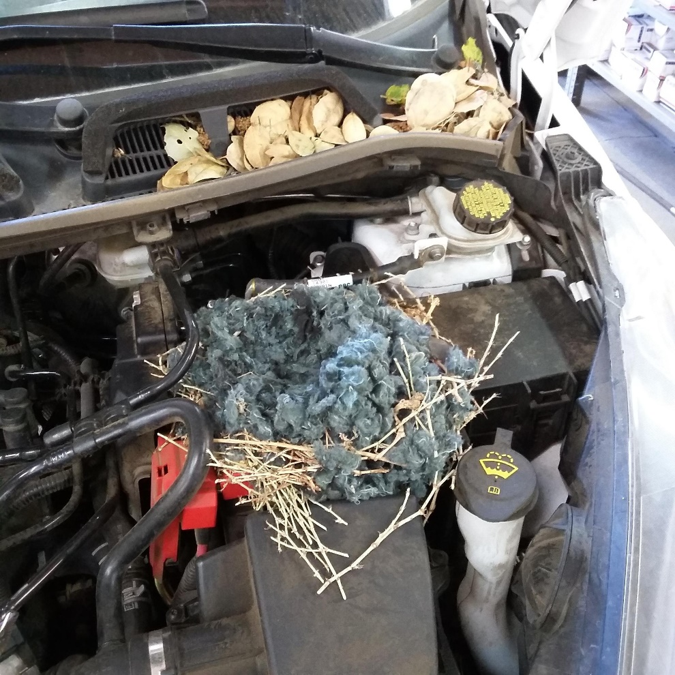
In one case we encountered, the vehicle was a Jeep Wrangler that was not driven regularly.
When it stopped running properly, our inspection revealed a rodent nest along with exposed wiring that had been chewed.
It was not an isolated incident. Rodent-related vehicle damage is a problem we have encountered before, and the effects can range from relatively minor to extensive depending on where the animal has been nesting and what it has damaged.
Rodents also have a natural need to gnaw. Once they settle into an engine compartment or another protected area of a vehicle, wiring, hoses, insulation, and similar materials may be vulnerable.
Signs Rodents May Have Been in Your Vehicle
Rodent damage is not always immediately obvious. A vehicle may continue operating until damaged wiring or another affected component begins causing trouble.
Some warning signs are visible before a mechanical or electrical problem develops. Watch for:
- Nesting material under the hood
- Droppings in or around the vehicle
- Chewed or exposed wiring
- Damaged insulation or hoses
- Leaves, paper, fabric, or other debris in unusual places
- Unfamiliar odors inside the vehicle or engine compartment
Problems with the vehicle itself can also provide clues. A check engine light, electrical malfunction, difficulty starting, rough operation, or a sudden change in performance could be related to damaged wiring or another rodent-related issue.
Of course, those symptoms can have many other causes. That is why proper diagnostics are important before assuming a rodent is responsible.
How Much Damage Can Rodents Cause?
Rodent damage can affect more than a single wire or component. Modern vehicles rely heavily on electrical wiring and electronic systems, so damage in one area can interfere with lighting, sensors, starting systems, engine performance, climate controls, and other vehicle functions.
Hoses, insulation, filters, and nearby materials may also be damaged or used for nesting.
Because some wiring is tucked away behind covers or other components, the full extent of the problem may not be visible without a closer inspection. A partially chewed wire may also continue working for a period of time before eventually causing an intermittent or complete electrical failure.
If you find evidence of nesting or chewing, addressing it promptly is a better choice than waiting for symptoms to become more noticeable.
Make Your Vehicle Less Inviting to Rodents
There is no guaranteed way to prevent every determined mouse or rat from approaching a vehicle, but reducing food sources and potential shelter can make the area less attractive.
A few practical steps include:
- Keep food, wrappers, and crumbs out of your vehicle.
- Store pet food in secure containers.
- Keep garbage cans tightly closed.
- Remove unnecessary vegetation, wood, and other potential nesting material near parking areas or garage walls.
- Seal accessible gaps or openings around your garage.
- Check vehicles that sit unused for extended periods.
- Periodically look under the hood for nests, droppings, chewed materials, or other signs of activity.
If you own a second vehicle or one that is driven only occasionally, checking it regularly is particularly important. A quiet vehicle that stays parked in the same location for long stretches can give rodents more opportunity to settle in without being disturbed.
What Should You Do if You Find Rodent Damage?
If you open the hood and discover nesting material or chewed wiring, avoid assuming the visible damage is the only problem. Wiring can run throughout the vehicle, and the source of an electrical or drivability issue may not be obvious at first glance.
At Central Avenue Automotive, our ASE-certified technicians can inspect the vehicle, diagnose related electrical or performance concerns, and determine what needs to be repaired. We believe in finding the source of the problem before recommending work. That is especially important with electrical concerns, where symptoms can sometimes point in several directions.
Do Not Let a Small Pest Become a Big Repair
Rodents may be small, but the problems they cause inside a vehicle can be anything but minor. Keeping your parking area clean, checking vehicles that sit for extended periods, and paying attention to signs of nesting or chewing can help you catch trouble sooner.
If your vehicle will not start, has an unexpected warning light, develops an electrical problem, or shows signs of rodent damage, we are here to help. Contact Central Avenue Automotive at 253-854-6762 or schedule your appointment online today.