

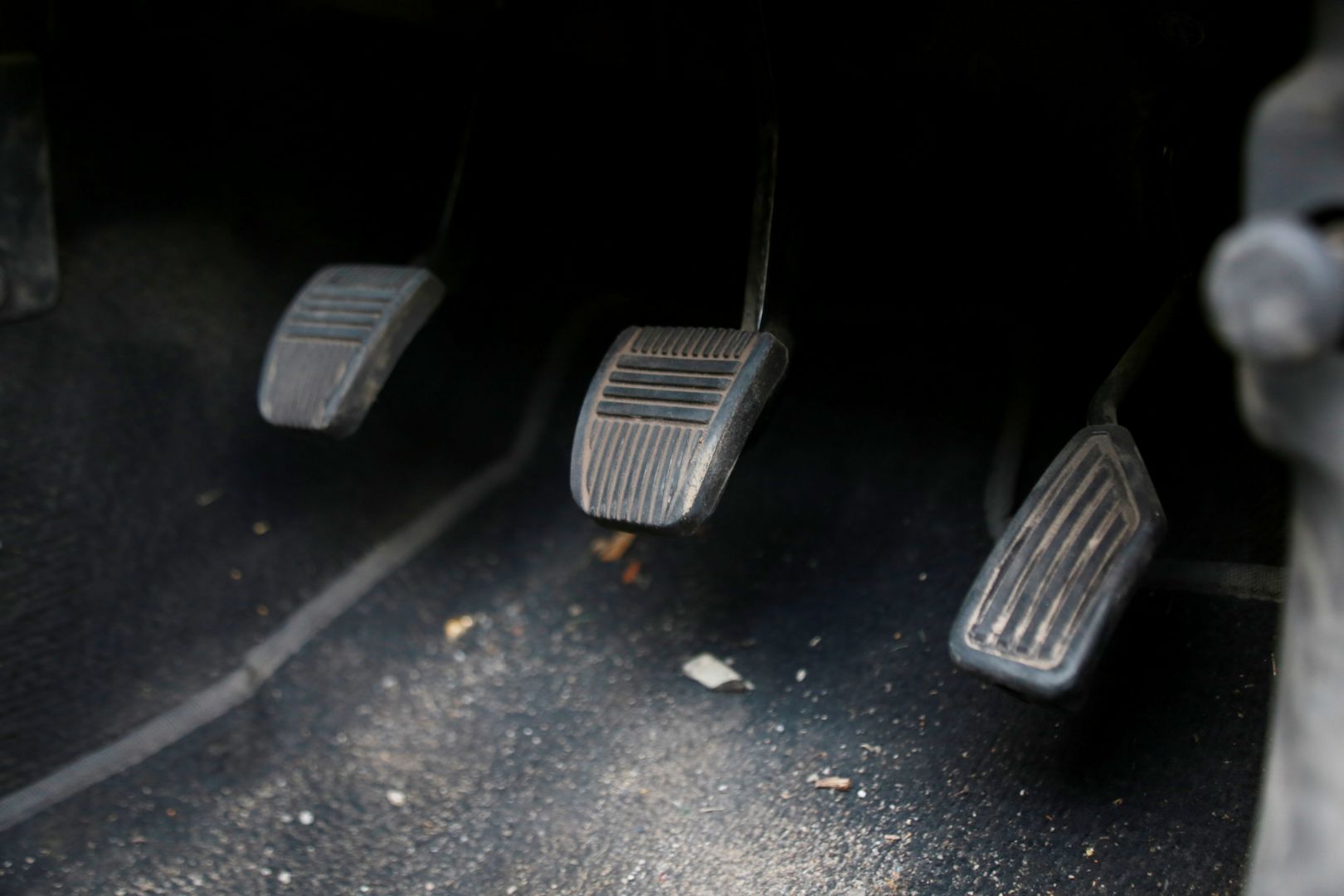
Why Your Clutch Pedal Stays on the Floor and What Needs Repair
If your clutch pedal stays on the floor, the problem may involve a hydraulic fluid leak, failed clutch master or slave cylinder, or damaged release mechanism. It doesn’t always mean you need a complete clutch replacement.
• Check for fluid leaks. Low hydraulic fluid or visible leaks can indicate a problem with clutch pressure.
• Notice how the pedal feels. A soft pedal, sudden loss of resistance, or failure to return can point to hydraulic or mechanical trouble.
• Don’t confuse a stuck pedal with clutch slipping. These symptoms often involve different components and repairs.
• Avoid forcing gear changes. If the clutch won’t disengage, shifting can damage transmission components.
• Consider towing. If you can’t reliably disengage the clutch or shift safely, towing is safer than driving.
Why Does Your Clutch Pedal Stay on the Floor?
You’re driving through Kent, press the clutch to change gears, and suddenly the pedal stays down. Maybe it feels unusually soft, or you have to pull it back up with your foot. Either way, something isn’t working properly. A stuck clutch pedal usually means the system that operates the clutch has lost pressure or experienced a mechanical failure.
In a manual-transmission vehicle, pressing the clutch pedal temporarily disconnects engine power from the transmission so you can change gears smoothly.
Most modern manual-transmission vehicles use a hydraulic system to transfer force from the pedal to the clutch release mechanism. Some older vehicles use a cable-operated system instead.
When that system fails, the clutch may not disengage correctly, leaving the pedal on the floor or making it difficult to select gears.
Understanding which part failed matters because a stuck clutch pedal doesn’t automatically mean the friction disc is worn out.
Is a Hydraulic Leak or Failed Cylinder Causing the Stuck Pedal?
Hydraulic clutch systems rely on fluid pressure to operate the release mechanism. When you press the clutch pedal, the master cylinder creates pressure that moves through a hydraulic line to the slave cylinder.
If pressure escapes or a component fails internally, the pedal may lose resistance or stop returning normally.
Clutch master cylinder failure
The clutch master cylinder converts pedal movement into hydraulic pressure.
Its internal seals can deteriorate, allowing fluid to bypass the seals rather than build proper pressure. Some failures occur without an obvious external leak.
Common symptoms include:
• A clutch pedal that feels soft or sinks toward the floor.Difficulty shifting, especially into first gear or reverse.
• Difficulty shifting, especially into first gear or reverse.
• Pedal resistance that changes between presses.
• Fluid leakage near the pedal assembly or firewall.
A failed master cylinder may need replacement, followed by proper hydraulic bleeding to remove trapped air.
Clutch slave cylinder failure
The slave cylinder receives hydraulic pressure and operates the clutch release mechanism.
Depending on vehicle design, the slave cylinder may be mounted outside the transmission bellhousing or incorporated into an internal concentric release bearing assembly.
A leaking or malfunctioning slave cylinder can prevent the clutch from disengaging fully.
You might notice fluid near the transmission, a pedal that won’t return, or gears that become difficult to engage.
Repair scope depends on its location. An externally mounted slave cylinder may be accessible without major disassembly. An internal concentric slave cylinder typically requires transmission removal, which can change the repair recommendation.
Low fluid, damaged lines, and trapped air
Not every hydraulic problem starts with a failed cylinder.
A damaged hydraulic hose, leaking connection, or low fluid level can also reduce clutch operation. Air entering the system may create a spongy or inconsistent pedal because air compresses more easily than hydraulic fluid.
A few useful observations include:
• Whether the fluid reservoir is below its specified level.
• Whether hydraulic fluid is visible near the firewall or transmission.
• Whether the pedal temporarily improves after several presses.
Some vehicles share a fluid reservoir between the brake and clutch hydraulic systems. If brake performance or pedal feel is also abnormal, don’t drive the vehicle.
Inspecting hydraulic components and locating the source of pressure loss is more useful than repeatedly topping off fluid.
Could a Broken Clutch Release Mechanism Keep the Pedal Down?
A clutch pedal that stays on the floor isn’t always caused by leaking hydraulic fluid. Mechanical parts between the pedal and clutch assembly can also fail, bind, or prevent proper pedal return.
This is especially important when the fluid level appears normal or the pedal suddenly becomes stuck without earlier warning signs.
Release fork and pivot problems
The clutch release fork transfers movement from the slave cylinder to the release bearing on vehicles equipped with that design.
If the fork bends, cracks, slips off its pivot, or becomes stuck, the release mechanism may not move as intended.
Possible clues include sudden changes in pedal resistance, unusual noises during clutch operation, or difficulty disengaging the clutch even when hydraulic components appear functional.
Release bearing or pressure plate problems
The release bearing applies force to the pressure plate’s diaphragm spring, allowing the clutch disc to disengage from the engine.
A damaged release bearing, broken diaphragm spring, or binding release mechanism can interfere with clutch operation.
These failures may produce grinding, rattling, or other noises when the pedal is pressed, although noise alone cannot identify the failed component.
Because these parts are commonly housed inside the transmission bellhousing, confirming the problem may require additional inspection or transmission removal.
Pedal linkage, return springs, and cable problems
The problem can also start at the pedal itself.
Worn pedal bushings, damaged linkage, a broken return spring, or a disconnected pushrod can affect how the pedal moves.
On cable-operated clutch systems, a damaged or seized cable can create similar symptoms.
A technician should determine whether the problem is in the pedal assembly, hydraulic or cable system, or internal release mechanism before recommending major repairs.
Stuck Clutch Pedal vs. Slipping Clutch: What’s the Difference?
A stuck clutch pedal and a slipping clutch can both make driving difficult, but they don’t necessarily involve the same failure. Understanding the difference helps explain why some vehicles need hydraulic repairs while others need clutch component replacement.
Compare the symptoms
| Symptom | Clutch pedal stuck on floor | Clutch slipping |
| Pedal behavior | Stays down, feels soft, or won’t return | Often feels normal |
| Gear changes | Difficult or impossible to shift | May still shift normally |
| Engine RPM | May behave normally, but gears won’t engage easily | Rises without matching vehicle acceleration |
| Common causes | Hydraulic pressure loss, linkage, or release mechanism failure | Worn friction disc, weak pressure plate, or contamination |
| Likely repair area | Clutch actuation system | Clutch assembly or related components |
Does a stuck clutch pedal always mean you need a new clutch?
No. A clutch pedal that stays on the floor doesn’t automatically require a new clutch disc, pressure plate, or complete clutch assembly.
If the problem comes from a leaking hydraulic line or defective external master or slave cylinder, repairing the affected component may restore normal clutch operation without replacing the friction disc.
However, if an internal release bearing or concentric slave cylinder has failed, accessing it generally requires removing the transmission.
In that situation, the technician may recommend inspecting the clutch disc, pressure plate, and flywheel while the transmission is out. Replacing additional components depends on their condition, mileage, vehicle design, and the owner’s repair goals.
What determines the repair scope?
The recommended repair depends on where the failure occurs and whether other components have been damaged.
For example, a hydraulic leak may only require replacing the leaking part and bleeding the system. A broken release mechanism could involve more extensive disassembly. A worn or contaminated friction disc may require a clutch assembly replacement.
A proper clutch system inspection and repair helps identify the failed components before deciding how much work is necessary.
The important thing is to diagnose the actual fault rather than assume every stuck pedal calls for a full clutch replacement.
Should You Drive or Tow a Car With a Stuck Clutch Pedal?
If your clutch pedal suddenly stays on the floor, continuing to drive can be risky. Without reliable clutch disengagement, you may struggle to shift gears, stop smoothly, or control the vehicle during traffic changes.
For manual-transmission drivers around Kent and Auburn, the safest choice depends on whether the clutch still operates consistently and whether the vehicle can be moved without forcing anything.
What should you do when the clutch pedal fails?
If the pedal becomes stuck while driving, focus on bringing the vehicle to a safe stop.
- Stay calm and find a safe place to pull over. Avoid sudden movements or unnecessary gear changes.
- Don’t force the shifter. Forcing a gear change while the clutch remains engaged can damage transmission synchronizers or other components.
- Don’t rely on pulling the pedal back up. A pedal that temporarily returns may still have an unresolved hydraulic or mechanical failure.
- Avoid restarting the engine in gear. Unexpected vehicle movement can create a safety hazard.
- Arrange towing if clutch operation is unreliable. This is generally safer than attempting to drive without a functioning clutch.
Once the vehicle is safely parked, a professional inspection can determine whether the problem involves hydraulic pressure, pedal hardware, or the internal clutch release system.
What happens during a clutch inspection?
A technician will typically begin with accessible components before considering more involved repairs.
The process may include inspecting the pedal linkage, checking hydraulic fluid levels, looking for leaks, evaluating master and slave cylinder operation, and confirming whether the clutch disengages properly.
If those checks don’t identify the fault, additional testing may be needed to evaluate internal release components.
This step-by-step approach helps avoid replacing functional parts and gives you a clearer understanding of the necessary repair.
Get Your Clutch Pedal Working Properly Again
When your clutch pedal stays on the floor, the cause may be a hydraulic leak, failed cylinder, damaged linkage, or internal release mechanism. It doesn’t necessarily mean the entire clutch is worn out.
The key is identifying why the pedal won’t return and whether the clutch can disengage safely. Driving with an unreliable clutch can make shifting unpredictable, so an inspection is worth scheduling before the problem gets worse.
If you’re dealing with a stuck clutch pedal in Kent or Auburn, Central Avenue Automotive can inspect your clutch system, identify the cause, and help you understand the repair options before work begins.